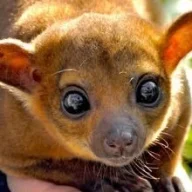
Anira Verseheart

Lady Lark of the Lanes
Weaver
Character Profile
Profile
Anira woke choking, her body jerking as the sea still had a hand down her throat. Sand filled her mouth, her ears, the folds of her clothes. Saltwater burned in her mouth, in her nose, in places only breath was meant to go. Sand scraped her cheek, already warm, clinging to sweat and tears. She retched. The sound of it was ugly, animalistic. Gagging on salt, sand, blood and the memory of drowning. The bard dragged in air that scraped in her troath, coughing until her vision speckled with black stars and each breath felt borrowed.

For a long moment she could not open her eyes.
When she did, the daylight stabbed her.

The lazurite blue sky was far too bright for someone who should have drowned before dawn. Empty of birds, empty of the comfort of clouds. When she rolled onto her back, something hard pressed into her hip. She flinched, heart lurching, then realized it was her lute case, cracked but present, tangled in brown kelp. For a moment she just lay there, listening to the weaves that rolled in and out soft, irregular claps, close enough to kiss her knees. She pushed herself up, the sea stretched vast away in every direction she could see, giving nothing back. For a hopeful moment she searched the horizon for wreckage, for a mast, for any proof that the world she had come from still existed.

There was nothing.
And the color blue never looked so merciless.

The last thing she remembered was the ship screaming. Not as a metaphor. Wood had shrieked. A sound the bard never thought to belong to timber. Ropes snapping. Hands slipping from hers, or perhaps hers slipping from them... Waves creeping forward and withdrawing again. She squeezed her eyes shut again, a whimper slipping out before she could stop it. Her head rang, hollow and loud.

She scrambled farther up the beach, heart hammering, and did not stop until her back hit the dry, scorching sand. The beach curved away on either side, pale and empty, like a crescent smile. Behind her, rose the jungle.

“Where...”
Silence. A dry swallow.

“Where am I?”
 
That thing in the water had resembled Tempestarii fables of old: sleeping gods of the sea who fled the stars in the Mother's Tears, creatures that superseded the natural order of this world. Kaina heard tell of them in the flotilla, but imagined them as fancies to keep the children tethered to their parents' ankles. Sure, he knew well as any that the Boiling Sea housed abominations of the like the curdle any shoreborn's blood. But he was Kharsagan, above such flights of fear and superstition.

Navigation was an art driven by study of reality, an intimate facet of life on the flotilla.

It shamed him to no end how he cowered before that creature. How he watched, curled up behind a barrel, as its many-rowed teeth ripped into the Boilbilge, as it dragged ship and man beneath the fog and brine. He told himself over and over: it's not my fault. He was one man, without weapon or weave. What could he have done? Nothing.

Clotted blood matted his hair accompanied by a throbbing ache that made a drum of his skull. Each breath ignited it anew, had him wishing for the embrace of sleep if not death. His mouth, numb and dry and full of salt and sand, worked in tandem agony. Lips split in wide crevices, caked in dried brine and seafoam seared to him by kiss of the sun. His flesh was red, twice darkened, blistered at the ears and under his eyes.

What remained of the whalefat he applied before diving off the 'bilge clumped together at his joints—elbows, knees, the crook of his neck—where it caught bits of kelp and rocky sediment from his tumble to the shore. His trunks were in tatters, bare at the thighs where the tight fabric tore against pieces of the wreckage. Covered in mottled bruising and lacerations, the young Kaina was a pitiful sight.

It took some time to collect the pieces of cognizance out of the primordial jelly pounding in his skull. He counted breaths as he went, trudging an eye open to the purple afterglow of an all-too bright sun. It was the voice that shook some semblance of wakefulness into him.

He was lying on a beach, arm wrapped around what had once been the 'bilge's horn cleat. A tangle of rope and snapped timber and driftwood clung to him with much the same veracity with which he held onto that cleat. Shaking it off was an excruciating endeavor; his elbow twisted awkwardly around it, shoulder a swollen bladder ready to burst.

He managed to scrabble to his knees, staggered to a slouch. Blinked away some of the afterglow.

"Not on the 'bilge 's for sure," he said, more a groan than any proper enunciation. His voice sounded foreign to his own ears. Dry, shaky, a broken mess that barely carried a pitch. He licked at those cracked lips. Stifled a cough.

"Can't see too well. Feels like shore, least. You hurt?"

If taken generously, maybe, it could be considered his atonement, concerning himself with another's health before his own.
 
Hot, too hot! Yuck.

Fig did not like tall bendy trees. Palm trees, as Papa had called them, were only good for one thing, but even the miraculous existence of coconuts was not enough to convince Fig to name the skinny, scratchy hell sticks. They were too tall, for one. And for another, lacked a great many interesting and useful qualities that other trees had, like loads of branches and tasty leaves, or a generous offering of shade. When their leaves died and fell, they did so with murderous intent, falling fast and humongously. Even their trunks were lacking. They were not wood like other trees. They were not grass either. They were just yuck in Fig’s book. Hard to climb, hard to cut, yuck yuck yuck. They might as well not even be real trees, but Papa insisted that they show respect for all living things, so Fig conceded the bare minimum: fine, they can be trees.

Though Fig had perfected the art of climbing these bad trees, they did not enjoy it. Especially not on such a hot day. The sun beat down on Fig’s head, heating it to almost painful discomfort. They really should learn to make a hat next. A shame, that Papa could not wake to teach them such things anymore.

Squinting their eyes, Fig sighed and started moving up the trunk again, a durable length of rope wound around the tree and their hips. They had experimented with many different techniques, including using spikes, but found that a simple rope caused the least fuss. Besides, their nails helped grip the rough bark well enough, making the trip tedious but doable. It was only ever really dangerous if the winds were strong, and on those days, Fig had enough sense not to bother.

Fig felt instant relief when shade enveloped them about two thirds of the way up. From here, it would be easy going. All they had to do was use their handy little hook knife to cut and twist the coconuts free, then let them drop into the sand. If they were lucky, most of them would not break right away. They preferred as few trips up these yuck trees as possible.

Once they reached the top, Fig took a well earned rest and looked out at the sparkling blue waves. The ocean was glinting like a giant jewel as the salty air wafted up to meet their twitching nose. Their eyes suddenly narrowed. There was…something else on the breeze, and also out along the shore. Many somethings. A faint stench of iron. The longer they looked, the more pieces of things they saw. Broken wood, barrels, and…bodies?

Fig felt uneasy, but also curious. It had been a long time since they had seen anything new on this island. And now, there appeared a huge amount of newness down below. The only problem was whether this newness would bring trouble.

Fig did not like trouble.

Well, first thing’s first. They were already up here with several very good looking coconuts. Being old hat at this by now, Fig wasted no time, hacking and twisting with their hook knife so that, one, two, three coconuts plummeted down in quick succession. From this height, the fruits could be quite lethal. But seeing as how there was never anyone around but Fig, they did not think twice about what—or who—might be lingering unsuspectingly below.
 
Last edited:
Back
Top Bottom