Strigòi Mort
“I knew I was damned from the very first swing of my hammer. I wasn’t nailing up our house. It was a coffin, with my Gigi still in there. Eight above, but seeing what the pox did to her only made me more determined to get our boy out of that place. I sealed it all away. Georgeta, the pox — everything, save for Adi and myself.
Or so I had thought. But she’s found us, all the way out here in our little stână. I know this, for she whispers to us. Not through the door, or our walls. From inside. And she is counting down the nights before we see her again.
I already knew that I was damned. If only I had understood, when I first picked up the hammer, that I would be damning us all.”
Or so I had thought. But she’s found us, all the way out here in our little stână. I know this, for she whispers to us. Not through the door, or our walls. From inside. And she is counting down the nights before we see her again.
I already knew that I was damned. If only I had understood, when I first picked up the hammer, that I would be damning us all.”
Excerpt from a written confession, discovered in the western steppes of the Mhearas
APPEARANCE
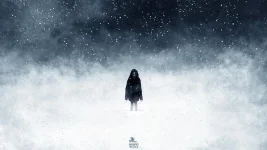
One who returns as strigòi mort (‘strigòi’ henceforth being used interchangeably with ‘strigòi mort’) looks every bit the corpse that it is; some, not so different from how they appeared the moment of their death, others, displaying days’ worth of rot from where their body had lain before rising. Wearing, too, whatever raiment in which they went to the grave.Or so they appear in their ‘true’ form, but the strigòi’s animal ones are more varied. Some appear no different to other beasts of their ilk, yet others betray their nature through unnatural size and ferocity. Perhaps one strigòi’s beast-shape retains the stink of the grave about it, bears a deathly pale visage, or has eyes so black as to be empty sockets.
ORIGINS
Strigói mort, the forsaken dead. Not every corpse is fated to rise as one, and that’s just as well for the living. A weaver who has been touched by the Blight or other fell powers may return from death as something more dreadful, such as a strigòi mort. More often than that, however, it’s believed these undead are the souls of those abandoned in death by their kin; a curse born of betrayal and loneliness. Furthermore: those who perish after a strigòi has fed upon them are also fated to become one in turn. Strict funerary rites usually take care of this problem before it even becomes one, but not every cadaver manages to receive such treatment.STAGES & ABILITIES
These undead are notable for progressing through three different kinds of manifestation: incorporeal, bound, and lost.INCORPOREAL
For the first few days of their existence, strigòi are mostly disembodied spirits, though they’ve the ability to physically interact with the world to an extent. The ghost haunts those it perceives as having forsaken them, generally engaging in not-so-lighthearted mischief, but also, sometimes just doing little things it would have done in life — putting tools back where they belong, stoking up a dying fire, washing the dishes, and so on.BOUND
After seven nights, the real fun begins. The strigòi’s corpse rises from the grave after sunset and continues its torment of the living, possessed of dread powers and a singular hunger. It might take days, weeks, even months to get there, during which time it continues to visit its family and act much like it had never left; sitting in its favourite armchair, joining everyone at the table during dinner, slipping into bed with its spouse in the dark hours. Sooner or later, though, a strigòi begins to turn and reveal its fearsome nature. They begin tormenting and feeding upon those who were closest to them in life, but it doesn’t stop there. Once their family has joined them in death, these cursed souls move onto friends and neighbours, spreading ever outward.Ostensibly, strigòi feed upon the blood of living folk, but it’s not quite so simple as that. Some have tried to bargain with the creatures, and they do often retain their ability to speak, so it’s understandable when a village might offer up a little blood from everyone each night rather than be bled to death one by one. And the strigòi in turn will say whatever it takes to get its victims to lower their guard, because talking to them is ‘conversation’ in the same way that an anglerfish’s lure is ‘food’ to some doomed little marine creature swimming by. Regardless: blood alone is just a means to an end. What strigòi really feed upon is life itself, and it is never satisfied by anything which does not result in death. It targets a single person, usually over several nights, striking them gravely ill until they perish. Even if that victim survives a visit and is protected from subsequent ones, the only way to restore their vitality is to slay the strigòi responsible. Unless this is done, those afflicted by the strigòi’s sickness are still doomed to an early grave.
Strigòi roaming in their old bodies are unnaturally strong and make for terrifying foes, but they rarely attack head-on; these are hunters of the night, who prefer cunning and stealth. They also wield several other powers besides the aforementioned beast shapes: can adopt a kind of invisibility, are utterly unhindered by the dark, will survive and recover from almost any wound after a single day, trap those who are sleeping in nightmares which prevents them from fully rousing, and once a strigòi has marked a victim by feeding, that person cannot be hidden from them by any mundane means.
No one is entirely sure how strigòi gain their shapechanging powers, but theories are plentiful enough. Some say the spirit possesses those creatures it comes across while roaming the night, some posit the Blight’s corrupting influence absorbs animals which get too close to the corpse, and some believe they’re actually drawn toward the body to consume a portion of it, which somehow makes them of the same flesh. Whatever the case, the ability to adopt beastshapes seems to be a universally shared trait amongst strigòi.
It is fortunate, then, that they also have one distinct weaknesses in this stage: they must return to their grave before each sunrise. This usually makes hunting them a simple affair; the identity of a newly-risen strigòi is easy to guess based on its initial targets, and so long as you know where the body was laid to rest, you can make short work of it while it’s utterly incapacitated during the day.
However, a strigòi’s grave is not always so easy to find, and that is when they risk reaching their final manifestation.
LOST
Seven years after it has risen, a strigòi is no longer bound to return to its original resting place, and may hole up anywhere during daylight hours. Free to roam wherever they wish, their souls are considered to be truly, irrevocably, lost. Such strigòi have also had years to become terrifying hunters and elusive quarry in their own right, some even gaining new powers in addition to the ones above.HUNTING STRIGÒI
UNEARTHING
The first hurdle in dealing with a strigòi is actually recognising that’s what you have on your hands. Sometimes it’s easy, like when the disembodied voice of your recently-deceased family member starts talking to you at night. But at other times, a strigòi’s work is more insidious. It keeps itself hidden, attacking while the house is asleep, and leaving few signs that its victim has been stricken with anything other than a strange, but mundane, wasting illness. At most, said victim might rant deliriously about a nocturnal visitor, and other occupants may find themselves plagued by troublesome dreams.Animals seem particularly sensitive to the presence of strigòi. Unseen or not, they will oft cower from its passage, flee, or be driven to a frenzy. There is also a custom of using beasts to pinpoint the exact grave in which a strigòi rests: either a horse or a goose (some traditions further state the animal must be black in coat, others purport that white is needed instead) is led through the cemetery and over each grave. If it stops before any of them and refuses to budge — you’ve just found your bloodsucker.
BEHAVIOUR & TELLS
There are some habits amongst strigòi which can be exploited to oust one as such, or protect against them.As previously mentioned, younger strigòi must return to their graves before dawn, while older ones will still find someplace dark to hole up during the day. Sunlight does not actually destroy them, but they are typically rendered inert when exposed to it, like an ordinary cadaver.
Once a strigòi has begun to feed on someone, they are loathe to move onto a fresh victim before the first has been drained of every bit of vitality they have. Despite all their cunning, this urge of theirs is also predictable, and a canny hunter can use that to their advantage.
Some accounts suggest a curious aversion to the ‘rule of threes’. A strigòi is supposedly incapable of asking the same question or making the same request three times in a row, so it is a custom amongst those who must deal with them that, when a suspected strigòi comes a-knocking, to wait until the third time that a stranger requests to be allowed in (or asks if anyone is home, or if someone can come outside to help them, etc.) before opening the door. That’s the most typical manifestation of this behavioural compulsion, but other aversions to instances of threes supposedly do occur, e.g. when choosing a new household to torment, a strigòi may go one, two, or four buildings down from its previous target, always skipping the third.
Unlike some other forms of vampire, strigòi don’t actually need to be invited inside to enter a household or other such delineated premise. A few of them might have this compulsion, but if so, it will be unique to that particular individual, probably some aspect of their behaviour in life carrying on and corrupted in their Blighted, restless death. In fact it’s quite common for a strigòi to retain some of their mannerisms, even taking them to a dark, obsessive extreme. Knowing a strigòi’s specific compulsions can be very useful indeed, allowing someone to predict their actions to evade danger — or find a weakness at which to strike.
WEAKNESSES
Those who know anything about these undead have probably heard of the apotropaic powers of certain plants, garlic being the best-known, although sweet basil is also supposed to dampen a strigòi’s supernatural powers, especially when it’s fresh and in bloom. Why these two? Hard to say, but one theory is that Allium sativum and Ocimum basilicum aren’t all that special in and of themselves. Rather: of all the materials which have some efficacy against undead (silver, salt, blessed water, etc.), strigòi have a particular weakness against those derived from living things. Stakes carved from an ash tree which has housed a sacred nature spirit, herbs grown within some sanctified boundary of land; such things likely already possess some blight-purifying quality which make them useful against undead in general, but particularly efficacious when it comes to strigòi mort.(RE-)KILLING
As for actually dispatching strigòi: a spike of iron or wood driven through the heart binds it in place, but truly destroying it requires one to be much more thorough. The surest way discovered seems to be decapitation, followed by burning the body entirely to ash (as generally ought be done to begin with). In particular, the heart must be destroyed, and there are reports of the organ animating and attempting to flee — another good reason to pack some sturdy stakes when going strigòi-hunting. Burning the heart is absolutely imperative, and if its ashes are made into a tonic and fed to a surviving victim, their vitae is returned to them.SOURCES
As strigòi viu and strigòi mort are figures of real-life Romanian folklore, the following list of sources is provided so as to adhere with the submission guideline’s requirements.- Episode 79: Transylvanian Vampires (Bone & Sickle). A bit goofy, but does draw on several interesting historical sources regarding Romanian folklore.
- The Vampire: A Casebook (Ed. Alan Dundes). Popped up when looking for resources by Agnes Murgoci, after seeing Bone & Sickle’s own list of references. Agnes Murgoci was a zoologist who, after marrying Romanian professor Gheorghe Munteanu-Murgoci and moving to Bucharest, documented, translated, and published articles/essays on Romanian folklore.
- Strigoi (Wikipedia). Because of course Wikipedia. Useful as a jumping-off point for the subject, at least. But the page on strigòi does appear to list quite thorough citations.
- A Village Still in Thrall to Dracula (the Guardian). Once you’re past the dramatic title, an interesting account of the strigòi mort legend enduring into the modern age.
Contributors: Verity
Art Credit: “Young Vampire” by Nenad Sarac (https://www.artstation.com/nenadsarac)
Last edited: