Miraj'Dah
| Languages: | Mansabic, Faamabic, Common |
| Biome: | Mechanical flying city with surrounding desert and oases. |
| Allied with... | Various desert tribes |
| In Conflict with... | Cindersend and certain desert tribes. |
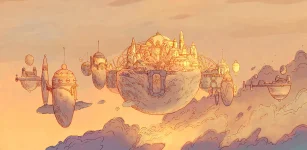
Miradj'Dah is a vibrant floating city, deeply rooted in a rich blend of magical technology and spiritual traditions. Its society revolves around the unique power of crystals mined from the Suldazan desert, which provide the energy to keep the city suspended in the sky and fuel its advanced magical infrastructure.
The Miradi people value harmony between the natural world and their technological advancements, believing that the crystals are divine gifts from the Goddess Aja’re (the name that Miradans have given the celestial ring of the world). Their culture emphasizes a balance between magic and nature, with a strong focus on the spiritual aspects of their work, art, and daily life. The people view magic not merely as a tool but as a living, sacred force connected to their gods: Aja’re, the World Mother; Nzuri, the Sky Weaver; and Takoumba, the Trickster.
The city is known for its intricate craftsmanship, particularly its architecture and art, which incorporate the magical crystals and natural elements. The Miradi celebrate their heritage through grand festivals, such as the Festival of Ascension, and maintain a strong connection to the desert below through annual expeditions to harvest crystals.
Governed by a ruling council and a hierarchy of magical guilds, Miradj'Dar's society is highly stratified but functional, with a strong emphasis on merit and magical ability. Despite its advancements, the city retains a deep respect for tradition and the spiritual origins of its power, creating a unique fusion of innovation, mysticism, and faith.
Governance
The Mansa
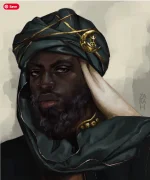 The absolute power in Miradj’Dah is the Mansa, holding both spiritual and political authority in the city. He is seen as the divine embodiment of the connection between The Mother and the people and as such, the Mansa’s role is to ensure the harmonious balance between magic and governance. He is believed to channel the power of the gods, guiding the city with wisdom and supernatural insight. The reigning Mansa is Nebu the Prophet.
The Faamaba
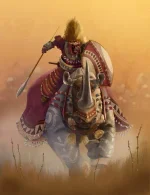
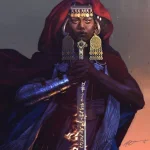 The city’s military leader and wife of the Mansa. The Faamaba is in command of the city’s military forces, including the Nzuri’daba, an elite airship warrior unit as well as the Aja’re’kuta, the ground forces that protect the city from desert incursions and guard the crystal veins that keep the city afloat and are sacred to the World Mother. Surayaa the Lioness is the chosen Faamaba
Tokura al-Shams
“The Great Order”. A prestigious order of warriors and diplomats. They are tasked with being “The Hands of the Mansa”, they are seen as the city’s highest honor guard, trusted with the most sensitive tasks, from safeguarding the throne to negotiating crucial alliances with foreign powers.
The Baara’Kasa
The "Baara'Kasa" translates to "Council of Crystals”. It is composed of influential figures representing the city’s magical guilds and noble families. Though the Mansa has ultimate power, the council advises on matters of law, economy, and diplomacy. Members of the council are chosen based on both- merit and lineage, as many believe magical ability is influenced by the blood in one's veins. They are responsible for the daily management of the city’s magical technology, trade, and policies.
The Daa’ra
"Daa'ra" translates to "molders" or "shapers". This elite guild of engineers and magical artisans is responsible for maintaining the city’s floating structures and technological infrastructure. As the keepers of the crystals that power Miradj'Dar, they hold immense influence and work closely with the Mansa to ensure the city’s stability. Their mastery over crystal manipulation is seen as a sacred duty, and they are regarded with great respect.
The Suma
“Suma" translates to "seekers" or "learners". The scholars are a learned class of philosophers, scientists, and historians who delve into the mysteries of the magical crystals, the Suldazan desert, and the city’s history. Their studies provide insight into new magical technologies and how to better harness the powers of the crystals. They are also responsible for educating the next generation of leaders and magic-users in the Spire of Winds, the city’s central academy.
The Wanjila’Dara
"Wanjila" means "pathfinder" or "traveler," while "Dara" refers to the desert. The traders and merchants form the backbone of Miradj'Dar’s economy. They risk the dangers of the Suldazan desert to procure essential goods, including the magical crystals that power the city. The traders are highly respected for their resilience, and their caravans play a crucial role in maintaining the city’s wealth and trade relations with other regions.
The Zana’gari
"Zana" means "hands”, while "gari" refers to "the city" itself. Although the magical technology of Miradj'Dar reduces the need for manual labor, there is still a class of workers responsible for mining crystals, maintaining airships, and handling goods at the Sky Docks. These laborers, while lower in status than the artisans or scholars, are free citizens and are essential to the city’s functioning.
Takoumba’ni
The secretive followers of the Trickster god Takoumba are called the "Takoumba'ni." "Ni" translates to "whispers" or "shadows”. A Secretive cult, the Takoumba’ni answer directly to the Mansa and are said to enact his will in secret throughout Miradj’Dah as well as other nations.
Culture
Miradj’Dah is deeply rooted in the balance between natural forces and magical technology, derived from crystal deposits throughout the Suldazan desert. Most of the city’s people, called The Miradi, believe that these crystals are gifts from Aja’re, The World Mother. For their Kingdom was founded in the aftermath of the Mother’s Tears. Their religion is based around the principles of three dominant spirits and avatars of the universe, each representing the fundamentals of what the early Miradi people understood of their universe: Heaven, Sky, and Earth. The harmonious use of these energies to create magical technology is seen as an artform by the Miradi, and by many a tribute to the spirits they worship.The city is built on multiple floating tiers, each hovering at different heights. These tiers are connected through elegant, magically reinforced bridges and stairs that shimmer under the stars at night. The higher tiers are reserved for the nobility, magical guilds, and ruling elites, while the lower levels are where traders, artisans, and common folk live.
The most valuable export from Miradj’Dah are the Suldazan Crystals, which have magical properties and are in high demand across the world. These crystals are essential for powering magical technology, prosthetics, and various other applications. The city also exports all manner of artisanal goods such as jewelry, textiles, and weapons infused with magical properties. The Suma produce enchanted fabrics that offer magical protection and enhance magical abilities. Scholars from the Suma often travel to share their knowledge of crystal magic and arcane arts, and the city frequently offers magical consultation to other friendly or neutral regions.
Major Cities/Landmarks
Djiko'Sa
“Sun’s Blessing” the tallest structure in Miradj'Dah, a magnificent spire made from enchanted gold that reflects the sun’s light and glows brightly even at night. Located at the center of the city's noble district, this spire is both a symbol of the city’s divine connection to the heavens and a powerful magical beacon that helps guide airships to and from the city.
The Hanging Palaces
A cluster of palatial complexes suspended from the city’s lower tiers and connected by sky bridges. Their elegant structures, seemingly floating on air, house the elite, scholars, and city’s governing council. The architectural designs feature tall spires and graceful domes made of enchanted gold and sandstone.
Kasa’Takoumba, The Obsidian Temple
A massive, black obsidian temple dedicated to Takoumba, the Trickster God. Located on one of the city's uppermost tiers, this temple is one of the most visually striking landmarks, with its spires and walls made of gleaming black stone. The Kasa’Takoumba is filled with secret passages, hidden chambers, and enchanted mirrors that reflect different versions of reality.
The Skydocks
A sprawling network of sky docks where the city's skyships are built, maintained, and launched. This floating harbor is an essential part of Miradj'Dar’s infrastructure, as it is the hub of trade, transportation, and defense. The sky docks are home to the Nzuri’daba, the elite airship warriors who protect the city and oversee all air traffic.
History
The Era of Promise1 EP- Earliest Miradan records claim that the desert was haunted by wraiths and djinn after the Tears of the Mother. The First Mansa was said to have received The Truth of the world from Aja’re the World Mother. Using The Truth, the Mansa united many of the various tribes in the Kiakias Desert and waged war against the vile spirits. The First Mansa established the city of Miradj’Dar about the crater of the largest impact as a symbol of his people’s triumph and so they might grow closer to Aja’re’s brilliance.30 EP- Din al-Aja’re becomes the predominant religion within Miradj’Dah, an amalgamation of gods, spirits, and ancestors worshipped throughout the Kiakias. The most high of these spirits are Aja’re, The World Mother; Nzuri, The Sky Weaver, and Takoumba, the Trickers
250 EP- Faamaba Kankan defends the city from desert tribes that were said to be moved by a vile spirit. Kankan died after pushing their force back into the Red Dunes and perished when facing The White Wraith. Kankan’s son would later take up his father’s sword to banish the wrathlord.
700 EP- Mansa Dini’ni the Siren was said to have invited a Deva General to Miradj’Dah. It was said he was enraptured by her Truth and became the first and only Faamaba that was not of the Miradi. A group of Takoumba worshippers conspired to slay him for such an insult. The Mansa enraptured them as well, said to have been made aware of their intentions by word of of the Trickster Spider himself. After Dini’ni brought them to heel, the assassins became known as the Takoumba’ni.
701 EP- Faamaba Bashtrik the Horned One is killed in his sleep. His death is met with outrage from his men who declare war against The Mansa. Mansa Dini’ni is said to have sent a letter to the Deva General that took Bashtrik’s place. What it said is not known, but in the coming months the General lowered his arms and retired to Vapna.
Contributors: Vae the Honorable
Attachments
Last edited by a moderator: