Plumhollow
Nestled in the palm of the mountain range colloquially known as the Fingers, Plumhollow rests as a bustling metropolis for the Smallfolk. With roots as a settlement of refugees fleeing the devastation of the Tears of the Mother and the encroaching threat of the then nascent Devahni empire, Plumhollow grew into its own over the centuries. Small burrows and thatch-roofed houses gave way to a blend Dwarven, Gnomish, and Beaver-folk architecture, intricately wrought across the valley of the palm in tune with the natural curvature of the ground.
The city itself, split with tributaries and rivers fed from the Finger's inner-bluff deltas, is layered with housing stacked about a compact space to give ground to the multiflorous orchards that ring its outer expanse. A premier exporter of timber, tobacco, silks, fruits, almonds, and of course plums, Plumhollow is a haven for trade and rest. Smallfolk generosity is rumored across the Ilican continent and has been earned many times over.
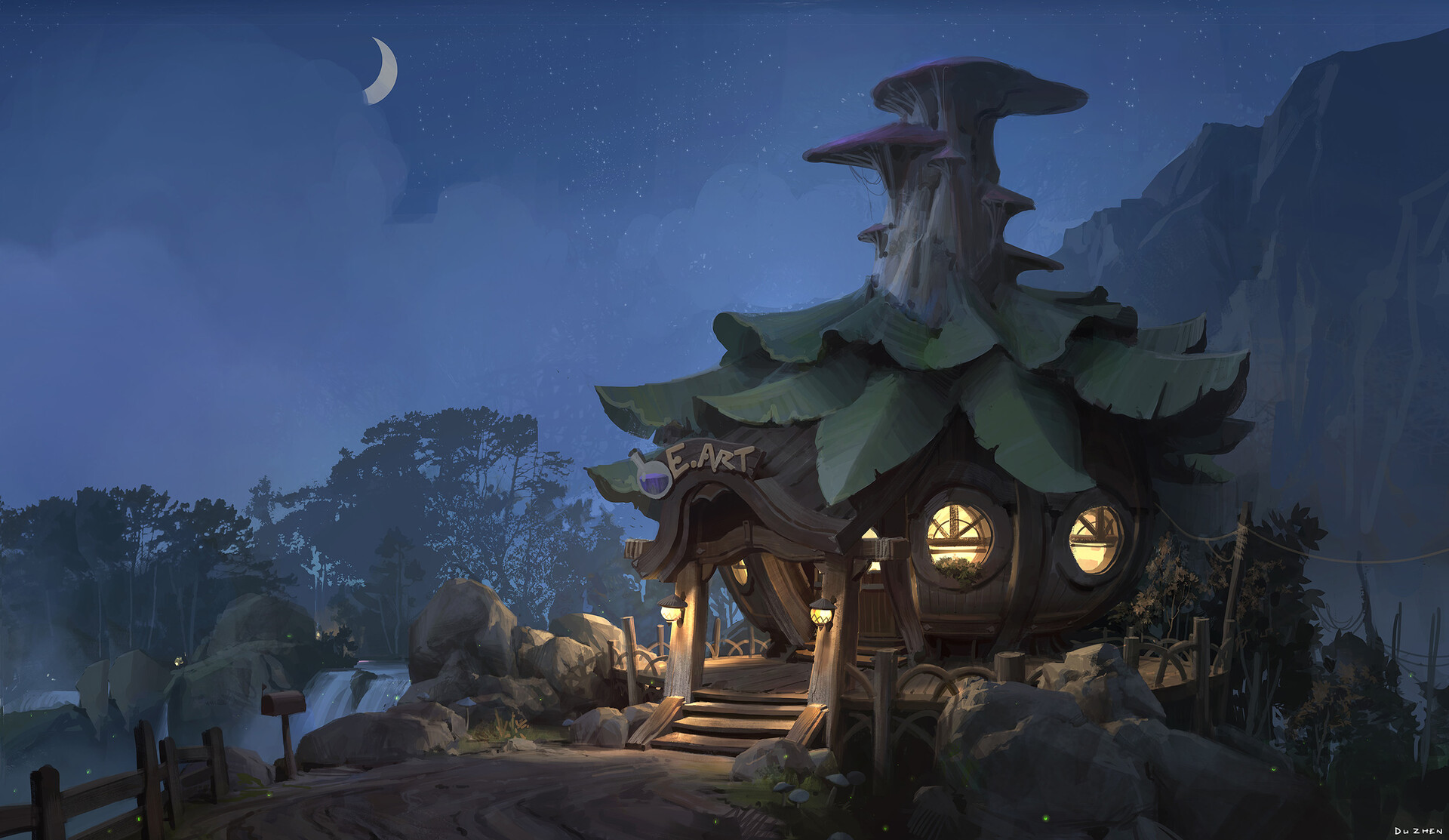
Trade and craft are important aspects of Plumhollow's continued growth. As a major exporter of fruits, nuts, silk, tobacco, and timber, the Plums are renowned for the quality of their goods if not always the speed with which they are delivered. Orchards ring the city's out expanse, neat rows of signature plum trees that blossom in myriad colors throughout the spring. Rows of pine stretch out along the valley's walls, comprising the majority of the city's timber exports; local woodworkers, Beaver-folk trained, ensure a steady supply of the supple wood. In the foothills, soil is rotated and churned for growing tobacco, surprising plants with leaves as wide as might a halfing be tall. And the alcohol... an abundance of fruit led to the development of several methods of distillery, a local favorite being the plum brandy pulped from the year's finest crop.
The city itself, split with tributaries and rivers fed from the Finger's inner-bluff deltas, is layered with housing stacked about a compact space to give ground to the multiflorous orchards that ring its outer expanse. A premier exporter of timber, tobacco, silks, fruits, almonds, and of course plums, Plumhollow is a haven for trade and rest. Smallfolk generosity is rumored across the Ilican continent and has been earned many times over.
Governance
Led by open discussion in what became known as the Crier's Hall, Plumhollow follows a chaotic system of popular vote: issues are raised by citizens, handled by appointed delegates, and socialized for many sessions before any recourse is found. Noted for its inefficiency, Plumhollow's governance has left much to be desired. Despite this, the city flourished across the eras, growing ever taller as more of the Smallfolk began calling it home. In the words of a local Plum, sometimes one only needs a little shouting, not a resolution. Truer words rarely ring so true across the entire Hollow; the Crier's Hall is rife with debate and the occasional, if not entirely frequent, brawl.Culture
The Mother and the Moth
In antiquity, it is said that the first Plums bore witness to the birth of a moon. Mokswahna, the eighth of the moons, the smallest of the Mother's children. Once a humble lantern moth that became lost having slept through a late spring's solstice, Mokswahna set upon a journey to find refuge. Fluttering about the night, flickering in waning bouts, scale dust shed in her dying wake. In desperation, she sought after the nearest light, an echo of the home, of the kin lost to her. For nine nights did she follow, straining to reach that distant beacon. On the tenth she perished, seeing at last that the light she sought was but that of the ring, of the Mother's own welcoming embrace.
Mokswahna died having never found her kin, and for such sorrow the Mother wept; the Tears of the Mother some call it, a star-rain that wrought devastation upon the world. Tears that shattered continents, parted seas, and carved the very vale in which Plumhollow rests amidst the Fingers of the Father. Grief satiated, the Mother vowed to honor the fledgling moth. She granted Mokswahna a moon.
Smallest of the Mother's eight children, but no less bright for this, Mokswahna the Moth was granted a seat in the ever changing sky. Brightest during the seasonal solstices, a nod to the young moth's sorrow, Mokswahna's tale is passed festival to festival in Plumhollow, told to any who might lend a willing ear. In reverence to the moth, the peoples of Plumhollow cultivate silkworms and moon moths with great care.
Orchards and Trade
Trade and craft are important aspects of Plumhollow's continued growth. As a major exporter of fruits, nuts, silk, tobacco, and timber, the Plums are renowned for the quality of their goods if not always the speed with which they are delivered. Orchards ring the city's out expanse, neat rows of signature plum trees that blossom in myriad colors throughout the spring. Rows of pine stretch out along the valley's walls, comprising the majority of the city's timber exports; local woodworkers, Beaver-folk trained, ensure a steady supply of the supple wood. In the foothills, soil is rotated and churned for growing tobacco, surprising plants with leaves as wide as might a halfing be tall. And the alcohol... an abundance of fruit led to the development of several methods of distillery, a local favorite being the plum brandy pulped from the year's finest crop.
Festivals
To the casual traveler or unfamiliar observer, the folk of Plumhollow often appear lazy, carefree of affect. Festivals are routinely hosted: in memory of Mokswahna, in thanks for the passing winter, in glee for the coming spring, rejoicing a bountiful harvest... truly, a festival for every season, for any reason strong enough to move a Plum from their labors.
Major Cities/Landmarks
Mokswahna's Rest
The rumored grove from which Mokswahna the Moth woke from her fabled nap, or so claim the signage on the well-marked trail leading up to it. An ancient plum tree that has not borne fruit in nearly a century rests in the center of the grove. Adorned in trinkets and written wishes from passing children, the Rest is seen as a symbol of good luck and casual worship, and has taken on the appearance of an amphitheatre over the years. With a movable stage set before the tree and rows of benches carved from local pine, the Rest sees a great amount of activity both from local Plums and visiting travelers. Some note a running bet to mark a day lacking in performances at the Rest; a standing wager the locals never quite hedge.
Plum Major
The inner core of Plumhollow, called Plum Major only in jest to foreign merchants and unwary travelers; the local Plums never get tired of snickering over the silly ways of outsiders. Fancy titles, impressive names, they need none of it, but delegations leaving the valley often give it such serious sounding monikers. All the better when tall folk take it for truth.
History
Founded by refugee Smallfolk in the wake of the Tears of the Mother in an era long past, the city's roots are lost to the tale of time. Oral records remain, poems and songs of myth and an era of legend where adventurous souls walk the long length of the world only to settle down in the protection of the Fingers. The earliest written records are of the Crier's Hall, clerical notes from town meetings that some ancestral Plum had the foresight to preserve. Most of these focus on disputes, some over land or right of trade, but most over marriages and petty grievance to the chagrin of many a historian. Most records of Plumhollow are found in Runefolk archives and charters of trade.Contributors: Toska
Last edited: