Shroud Resonance
The Shroud flows through all things, living and nonliving, but it does not flow through all things equally. This is something that the people of Khurun have naturally observed and taken advantage of for time immemorial. In more recent history, the theory of Shroud Resonance has emerged amongst academics, the notion that some materials conduct magic more readily than others, and that this conduction can be consistently measured and applied.
As follows is a non-comprehensive list of some of the better known materials used for, or against, woven spells.
Due to their unpredictability, spells that affect the living body are rarely attempted in the heat of the moment. It is much more effective to hurl a fireball at someone or liquefy the mud at their feet, rather than try to pull the air out of their lungs.
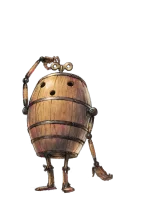 Flesh - The flesh of the recently dead is immensely receptive to shroud - so much so, that kingdoms and states have laws against its use, lest the dead be defiled and corpses be put to foul purpose. In Altalusia, for example, it is illegal for undead to hold contracts or perform labor, a harsh attempt to curb the work of reanimators.
Salt - The primordial churnings of the seas have long been known to produce strange shroud effects and magical leviathans. In 578 E.O.U. the alchemist Keitumetse distilled sea water and isolated its active catalyst: salt. The problem is that one needs piles and piles of it to do much of anything, making it an unattractive conduit outside of folk remedies.
Clay - Runes baked into a clay vessel, sealed jars to preserve rare magical ingredients, talismans sculpted in the shape of gods and monsters... the uses of clay in weaving work are numerous, as it is one of the most economic ways to make sure a spell will last beyond its initial casting.
Celestial Elements - The celestial debris that rains down from the heavens are some of the most conductive materials known to kith. See the page on the Celestial Elements for more.
All refined metals are shroud resistant, but to a lesser extent. The inertia of steel, iron, copper and the like can usually be overcome by runework or other methods of enchantment. Metals worked with runes and layered with shroud produce some of the most stable enchantments, reliable weaves that can last for generations.
Armonium Fiber - Unique magitech devised in Arshaka, its recipe is kept secret outside the echelons of Imperial magicians. Armonium fiber is not one material, but rather a mixture of armonium elements melted into thin, fibrous glass and woven in complex elemental arrays. Raw armonium sand naturally clusters in specific elements which bolster the shroud, but when elemental kinds are mixed together, a strange opposite reaction happens. Fire and ice, makes nothing. Air and earth, no movement. The shroud fuzzes out, pulled in too many different directions.
Wood - Certain trees with dense resins, such as piñon and agarwood, have a weak antimagical property when they are alive. Incense burned from these trees is said to ward off malignant forces. This property becomes stronger when cured, and stronger still when crafted by a knowledgeable hand. For this reason, wood is often used as an insulator for staves and wands, protecting their users from the more volatile components (like shroudstones) embedded in them.
As follows is a non-comprehensive list of some of the better known materials used for, or against, woven spells.
Living Beings
All living things — by sheer virtue of being alive, conscious or unconscious, plant, animal, or kith — are constantly regulating their own balance of shroud. They exist in an ever-flowing cycle of conduction and resistance, repelling shroud at one time and absorbing it readily at others. The mastery of this internal balance is a pursuit of many weavers. Whether a spell can disrupt the natural flow of another living being comes down to matter of circumstance, or a battle of wills.Due to their unpredictability, spells that affect the living body are rarely attempted in the heat of the moment. It is much more effective to hurl a fireball at someone or liquefy the mud at their feet, rather than try to pull the air out of their lungs.
Conductive Materials
Flesh - The flesh of the recently dead is immensely receptive to shroud - so much so, that kingdoms and states have laws against its use, lest the dead be defiled and corpses be put to foul purpose. In Altalusia, for example, it is illegal for undead to hold contracts or perform labor, a harsh attempt to curb the work of reanimators.Salt - The primordial churnings of the seas have long been known to produce strange shroud effects and magical leviathans. In 578 E.O.U. the alchemist Keitumetse distilled sea water and isolated its active catalyst: salt. The problem is that one needs piles and piles of it to do much of anything, making it an unattractive conduit outside of folk remedies.
Clay - Runes baked into a clay vessel, sealed jars to preserve rare magical ingredients, talismans sculpted in the shape of gods and monsters... the uses of clay in weaving work are numerous, as it is one of the most economic ways to make sure a spell will last beyond its initial casting.
Celestial Elements - The celestial debris that rains down from the heavens are some of the most conductive materials known to kith. See the page on the Celestial Elements for more.
Resistant Materials
Noble Metals - The antimagical properties of Gold, Platinum, and Silver have a long history, and these are the classical materials to use when countering curses, hexes and spells of all types. Many a magic sword has a sheath ringed with gold, and the silver-tipped bolt is a key part of any monster hunter’s kit.All refined metals are shroud resistant, but to a lesser extent. The inertia of steel, iron, copper and the like can usually be overcome by runework or other methods of enchantment. Metals worked with runes and layered with shroud produce some of the most stable enchantments, reliable weaves that can last for generations.
Armonium Fiber - Unique magitech devised in Arshaka, its recipe is kept secret outside the echelons of Imperial magicians. Armonium fiber is not one material, but rather a mixture of armonium elements melted into thin, fibrous glass and woven in complex elemental arrays. Raw armonium sand naturally clusters in specific elements which bolster the shroud, but when elemental kinds are mixed together, a strange opposite reaction happens. Fire and ice, makes nothing. Air and earth, no movement. The shroud fuzzes out, pulled in too many different directions.
Wood - Certain trees with dense resins, such as piñon and agarwood, have a weak antimagical property when they are alive. Incense burned from these trees is said to ward off malignant forces. This property becomes stronger when cured, and stronger still when crafted by a knowledgeable hand. For this reason, wood is often used as an insulator for staves and wands, protecting their users from the more volatile components (like shroudstones) embedded in them.
Contributors: bees?
Art Credit: Naoki Ikushima, character designer for Triangle Strategy